

/ Japanese
The birth of Japan according to Japanese mythology
The myth surrounding the birth of Japan is mainly found in two ancient texts: the Kojiki (古事記, "Record of Ancient Matters") and the Nihon Shoki (日本書紀, "Chronicles of Japan").

The myth surrounding the birth of Japan is mainly found in two ancient texts: the Kojiki (古事記, "Record of Ancient Matters") and the Nihon Shoki (日本書紀, "Chronicles of Japan").

The short answer is yes – basic Japanese verb conjugation is much simpler than it looks at first glance.
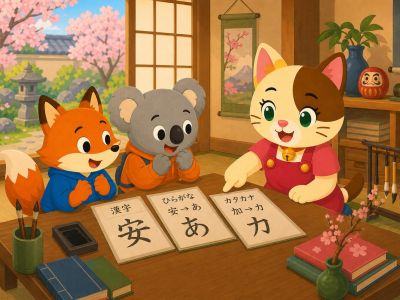
Hiragana and katakana are two of the three writing systems used in Japanese, the third being kanji. Although they are now taught very early on in Japanese lessons, both originated more than a thousand years ago from Chinese characters.
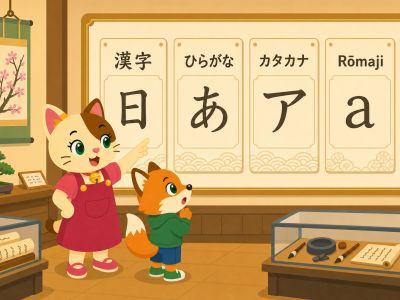
Kanji is the primary form of notation, but particles, auxiliary verbs, verb endings, and some adverbs are written in hiragana.
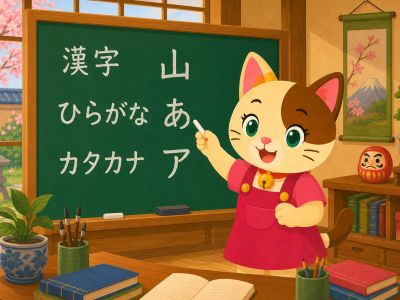
The Japanese writing system is based on a combination of Chinese characters (kanji) and two syllabaries: hiragana and katakana.

Japanese has five vowels: /a/, /i/, /u/, /e/, and /o/, which are the most basic sounds. The consonant phonemes include /p/, /b/, /d/, /k/, /g/, /t/, /m/, /n/, /r/, /s/, /z/, /h/, /j/, and /w/.